GETTING THERE
Kathmandu
We landed in Kathmandu at half past four in the afternoon, and I have never been more grateful for a visa I sorted before I left home. Less admin at arrivals means less chaos, and chaos was the last thing any of us needed after a long flight.
The airport felt like a small town terminal that had been given one very good upgrade, air conditioning, which kicked in the moment you collected your bags. Our luggage took its time coming out, and at some point I found myself holding onto Sibusiso's bag and Lungi's too, on nothing more than a hunch. I want to be clear that guessing whose luggage belongs to whom is not a game you play lightly at an airport with sniffer dogs patrolling the carousel. I waited.
Outside, our guide was waiting with a silk scarf for each of us, wrapped around our necks as a welcome. It is a small gesture and it undid me a little anyway. The drive out reminded me so much of India, the same tangle of electric cables strung overhead, the same sense that a country's energy runs on visible improvisation.
That first night we barely made it past supper before collapsing, meeting our fellow trekkers Lisa and Allan properly for the first time after only knowing them from a Zoom call. We were in bed by nine, and I still struggled to wake up the next morning, two cups of coffee deep before I felt human.
Gear check revealed the gaps. A rain cover for my duffel, a hair band, hiking essentials I didn't know I would need. Nepal's gear shops are a masterclass in confident counterfeiting, and I have never seen so much “North Face” that had clearly never been near North Face. I found a small handmade shop that nearly bankrupted me in cushion covers, the kind of impulse buying that happens right before your card gets declined and reminds you that you left your credit card at home like an amateur.
I napped that afternoon the way I always do when I actually mean to rest for five minutes. A true crime documentary, earphones in, two pillows, and an alarm set because otherwise I would sleep straight through the whole trip. It was raining when we headed out for supper, the first hint of the monsoon arriving early, and I would have happily eaten in my room and gone straight to bed. Some nights the mountain calls you before you have even reached it, and you learn to listen.
DAY 1
Lukla to Phakding
We were out of the hotel by six with breakfast packs in hand, only to spend most of the morning waiting at the airport for a plane that eventually arrived nearly three hours late. I had heard every story about the Lukla flight, the free seating, the tiny aircraft, the kind of turbulence that turns your stomach into a small, private drama. None of it disappointed. The landing was immaculate, and so, somehow, was the rest of the day.
I spent most of it talking with our guide and Sibusiso, getting to know the rest of the group. It was meant to be an easy day and I still felt it, which was its own reminder that this trip was not going to let me set my own pace. The accommodation that night was simple, the kind of simple that only a hiker calls comfortable, but there was a shower, and for a few more days at least, it was free.
DAY 2 TO 3
Namche Bazaar
Day two started early on the busiest trail we had seen yet. Five easy kilometres, then five that climbed hard and long, taking us up to 3,405 metres. I felt strong for most of it, and the one moment I did not was entirely my own doing. I had stopped drinking water.
Somewhere on that climb I noticed one of our fellow trekkers getting a lot more help than the rest of us, her pack lifted, her hand held on the tricky sections, and it sent me down a familiar road of thinking. About how a woman's struggle only seems to register as struggle when she is allowed to look fragile. About how toughness, when it is assumed of you rather than chosen by you, can quietly cost you the help you also need. I did not say any of this out loud. I just noticed it, the way you notice a stone in your boot on a long day, present the whole time, impossible to ignore once you have.
TRAIL NOTE:
Namche's acclimatization day started late and climbed anyway, up to 3,880 metres, a long day made longer by skipping my supplements because I had assumed it would be short. Lesson learned.
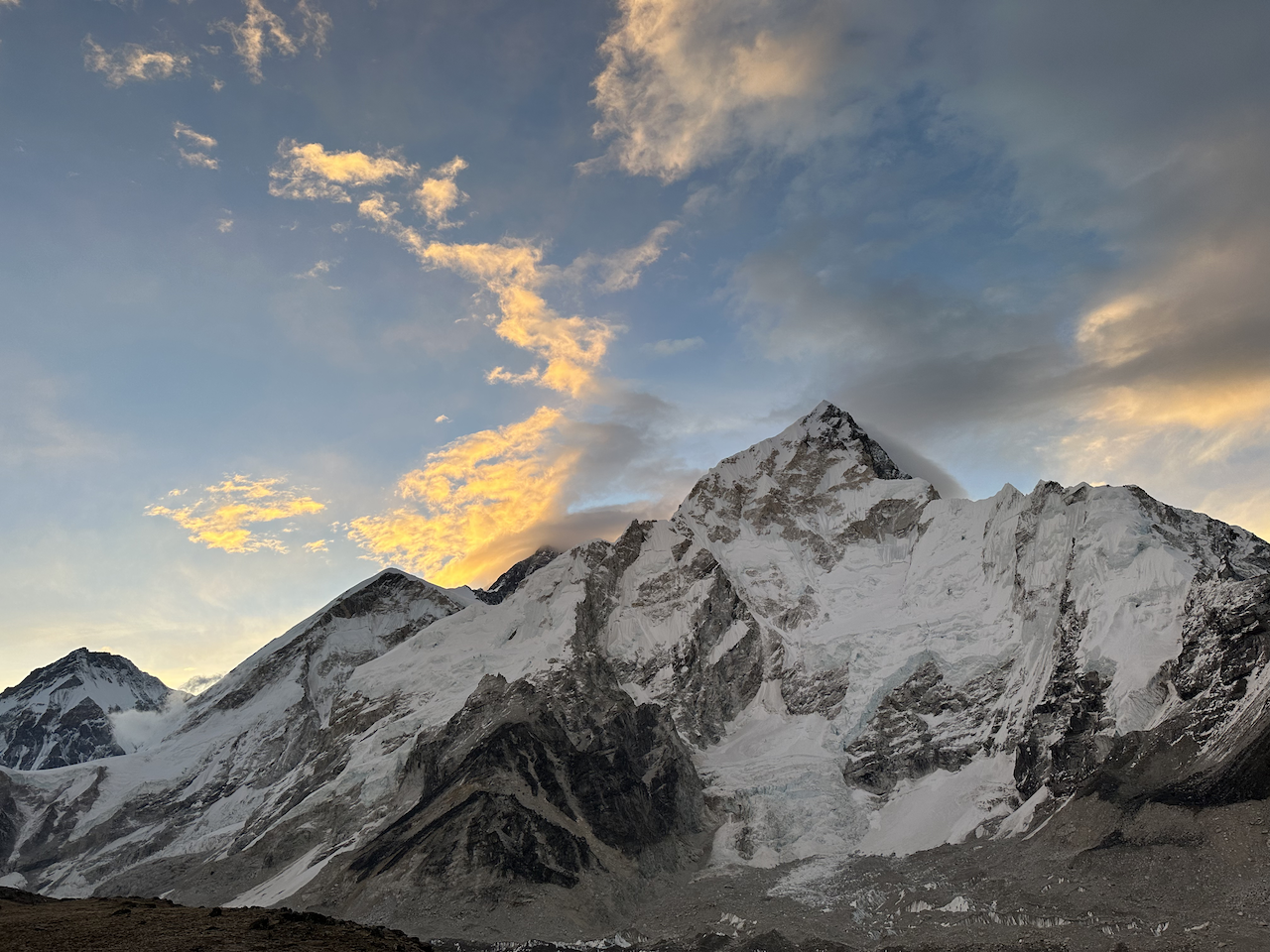
We got our first proper view of the snow capped peaks that afternoon, and I sat with it for a while, the sheer privilege of being able to chase a dream like this one, unhindered by health or money or time. I thought about Saray Khumalo, the South African mountaineer who became the first Black African woman to summit Everest, and how the first time I heard her story my instinct was simply, we do that too. I do not think I understood then what that thought would grow into. People tell me all the time that watching me do things like this made them believe they could do their own version of it. I used to take that for granted. I do not anymore.
DAY 4 TO 5
Tengboche to Dingboche
The climb into Tengboche ran through forests I wanted to disappear into properly, the kind of beauty that makes you forget your knees are protesting every step. My knees were protesting. I went looking for something like collagen at the local chemist and came away with pain medication instead, which is its own kind of Nepal welcome. That night's teahouse was the first we had shared with other guests, a small shift after days of having the place to ourselves.
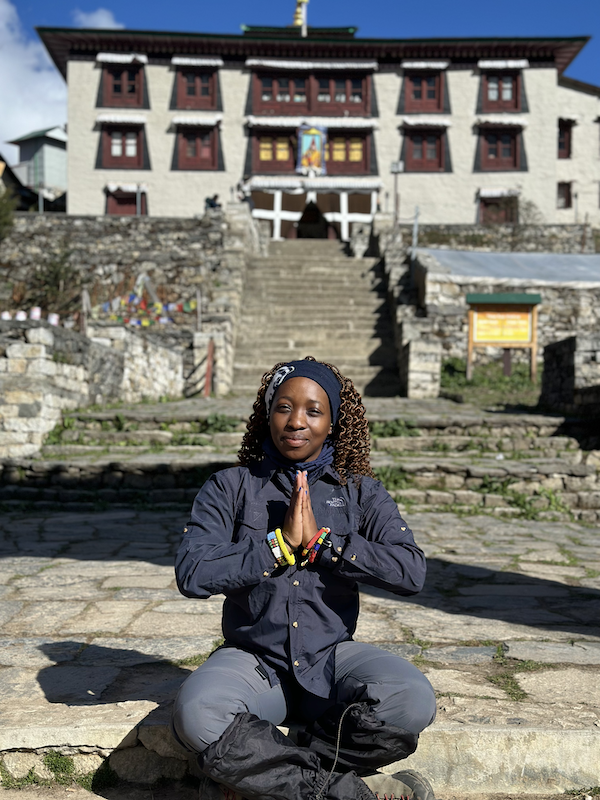
Dingboche gave me one of the most beautiful mornings of my life. Snow had fallen overnight, the sky had cleared, and the gong from the monastery carried across the valley in a way that undid something in my chest. I felt my grandmother with me in that moment, the way she always says she sees the world through me since she can no longer travel the way she used to. I stood there and let myself believe she was watching it too. The lightheadedness of altitude was very much present by then, but so was the sense that I was exactly where I was meant to be.
DAY 6 TO 8
Dingboche to Gorak Shep
The second acclimatization day brought its own kind of fatigue, less physical than mental, the noise of ordinary life creeping back in even out here, questions about work and home that I had hoped the mountain might quiet. It did not fully, but it gave me the space to sit with them properly for the first time in a long while, rather than burying them under one more busy week.
The push to Lobuche included a quarry crossing that tested every ounce of patience I had, followed by a long, insistent climb that had me reaching for my emergency can of Coca Cola for the first time on the trip. Lisa's altitude sickness was worsening by then, affecting her eyesight in a way that usually means the body needs sugar fast, so I handed over an energy bar and my electrolytes and hoped it would hold her until Gorak Shep. That night was the coldest of the trip, thick jacket and all, my sinuses unhappy with the dust and the cold air finding its way through the window gaps.
Gorak Shep arrived with a flu creeping in on top of the altitude, my thighs finally joining the chorus of complaints, and Lisa staying behind to recover while the rest of us pushed on toward Kalapatthar. I had not quite registered what that particular climb would demand of me until I was standing at the bottom of it.
DAY 9
Kalapatthar
We were up at four for a four thirty departure, and the flu had properly landed overnight. The pace out of camp felt unbearable from the first few steps, and somewhere in the freezing dark I hit a wall I did not see coming. I stopped. I cried. Not delicately, and not briefly.
THE BIT NOBODY WARNS YOU ABOUT:
It came from a specific place, the sense that nobody checks on the one who always seems fine, that being visibly strong somehow excuses everyone, including yourself, from asking if you are actually okay. I was sick, exhausted, and out in brutal cold, and the tears just kept coming long after I understood what they were about.
Lungi hugged me, and that meant more than she probably knows. Our guide told me to take baby steps, so that is what I did, one small movement at a time until the top arrived. I do not have a better word than challenging for what that climb was, because challenging does not quite cover it, but it is the word I have.
We came down, changed, ate, and slept most of the afternoon away. My eyes were still puffy from crying well into the evening. Some days on a mountain give you the summit and take something else in return.
DAY 10
Everest Base Camp
Another early start, another day my body fought me through, my head pounding, my legs and lungs and back all filing separate complaints. One of the guides took my pack for a stretch to lighten the load, which I needed more than I wanted to admit.
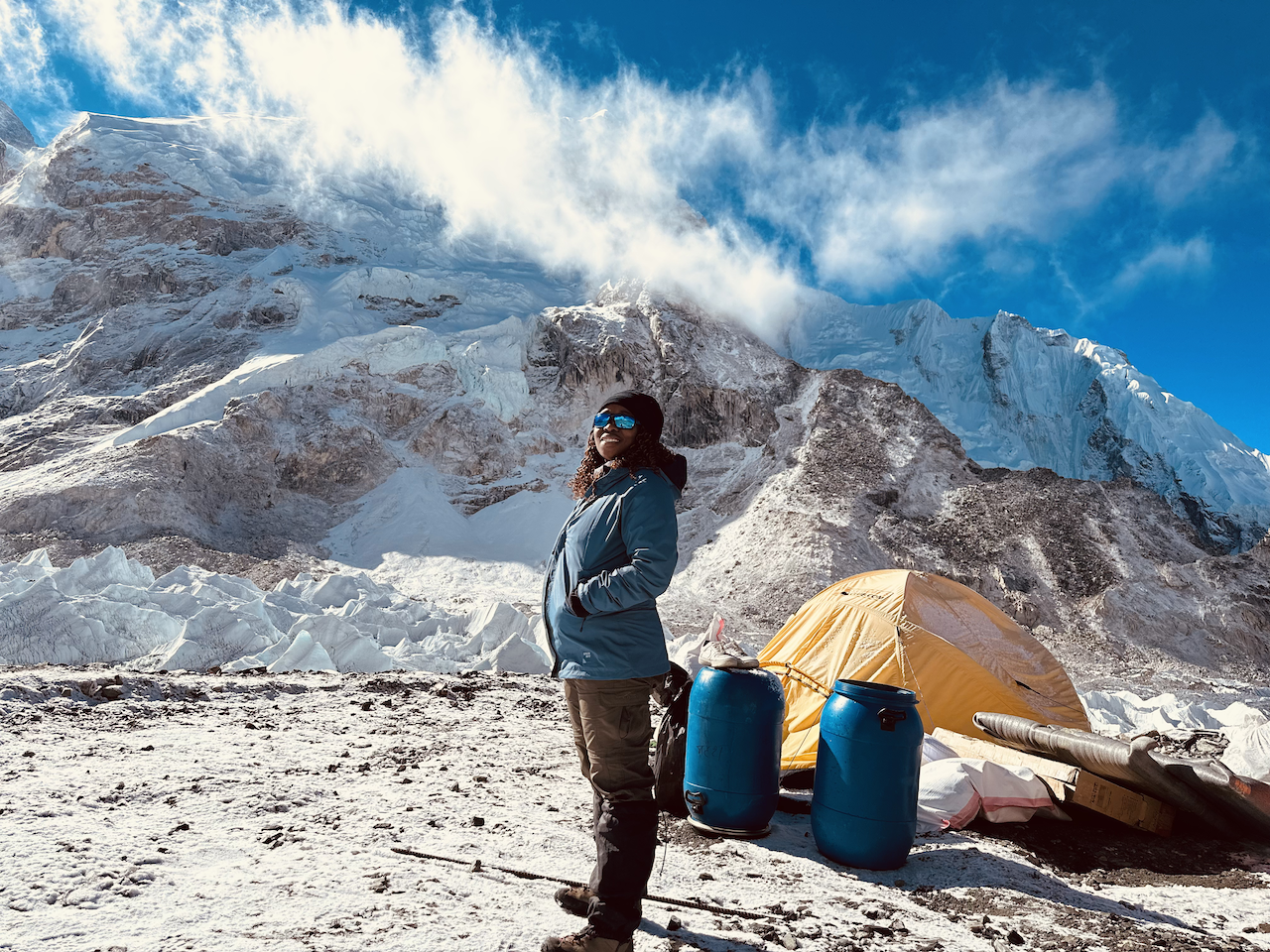
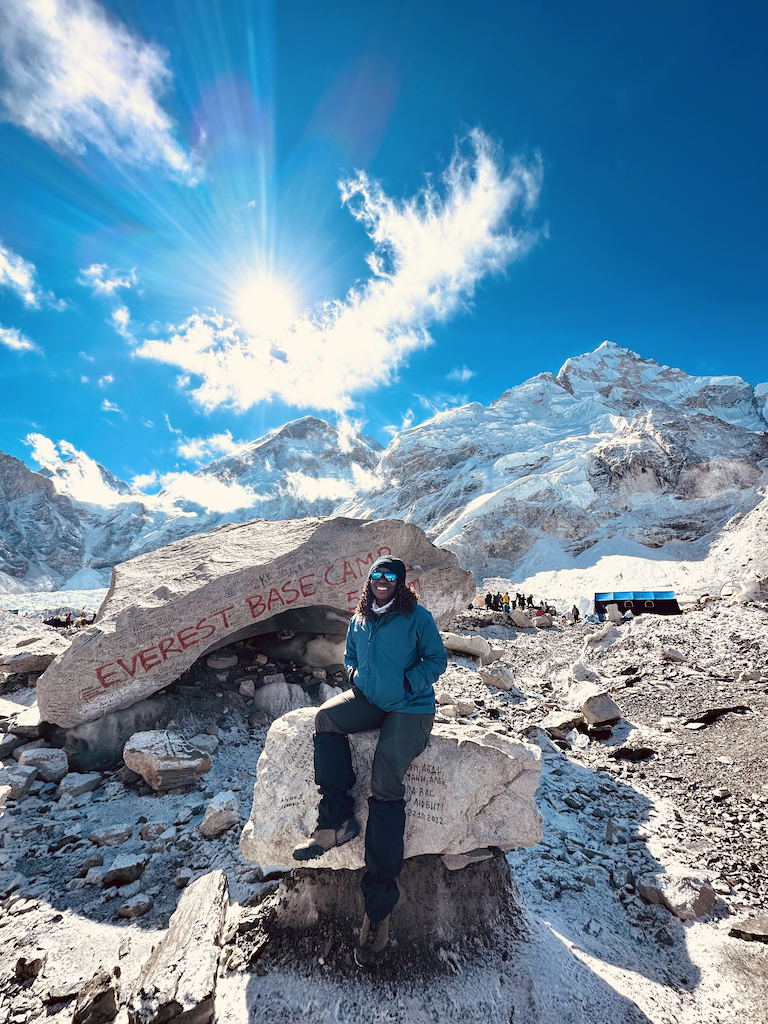
Base camp itself was strangely anticlimactic at first, just a large rock with prayer flags and a lot of relief. Then Sibusiso's excitement caught up with me and I cried properly, partly from the moment itself, partly from how long it had taken me to get here, not just up the trail but in life. We took our photos, held on to each other, and started the walk back down.
The lodge that night in Pheriche felt like stepping into a different world entirely, warm, welcoming, and the first proper toilet in what felt like a lifetime of squatting long drops. Walking in felt like walking into Hobbiton. I mean that as the highest compliment a tired hiker can give a building.
DAY 11 TO 15
The Long Way Down
Homesickness arrived somewhere around Pheriche and never fully left, the kind that talking to people back home only sharpens rather than soothes. The descent brought its own exhaustion, different from the climb, a tiredness that sits in your bones rather than your lungs. I read more than I slept some afternoons, finished a book I had been carrying the whole trip, and felt oddly sad to close it.
Somewhere around Namche I found a line in another book that put words to something I had been circling for two weeks, the idea of deliberately stepping outside your usual life, your tribe, your routine, just to be unobserved and briefly detached from all of it. That is the closest description I have found for why I keep doing this. Out here I am detached from work, from the busyness I somehow keep rebuilding at home, from anything that is not the trail directly in front of me, and I love it more each time.
The final stretch back to Lukla was the hardest to let go of, not physically, but emotionally. I did not want the clarity that comes with two weeks of nothing but walking and altitude and your own thoughts to end the moment we landed. Our last night together was full of fried momos, a shared beer with our porters and guides, and the particular warmth that only forms after two weeks of getting each other through something hard. Sorting out tip money for the team who had carried far more than their fair share, quite literally, was the least I could do.
On the flight out of Lukla I found myself thinking, if this turned out to be my last moment on this earth, I would not mind. I had just done something I once genuinely believed was out of reach for me. That kind of peace is rare, and I was not in a hurry to let go of it either.
We landed back in a hot, loud Kathmandu, tired, hungry, and a little seasick from the flight, and I stood under a long shower scrubbing off what felt like two weeks of trail dust before finally sitting down to butter chicken and naan that tasted like the best meal of my life. Civilisation felt strange for about an hour. Then it just felt like relief.
Everest Base Camp Gallery